Many warehouse managers become concerned when they notice a heavy-duty pallet rack moving slightly during loading, unloading, or manual inspection. A shaking rack often raises questions such as:
- Is the rack defective?
- Is it overloaded?
- Does it need replacement?
- Is it still safe?
The good news is that slight movement is not always a sign of poor quality. However, excessive shaking should never be ignored because it may indicate installation errors, structural damage, or unsafe operating conditions.
This article explains why heavy-duty storage racks shake, when it is normal, when it becomes dangerous, and how to solve the problem.
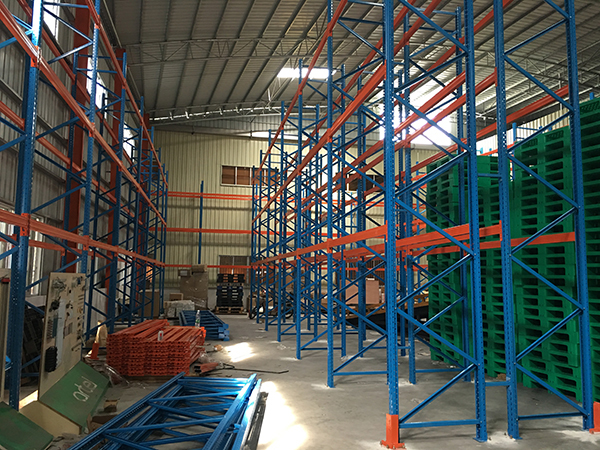
Is It Normal for Heavy Duty Storage Racks to Shake?
The short answer is yes—in some situations.
A pallet rack is a tall steel structure connected by uprights, beams, braces, anchors, and bolts. Unlike a reinforced concrete wall, steel structures naturally have a certain amount of flexibility.
When pushed by hand, the rack may move a few millimeters due to:
- Steel elasticity
- Connection tolerances
- Height of the structure
- Dynamic loading
This slight movement is designed into the system and usually does not affect structural safety.
However, visible swaying, continuous vibration, or increasing movement should be investigated immediately.
Common Reasons Why Storage Racks Shake
1. Natural Structural Flexibility
The most common reason is simply the elasticity of steel.
Heavy-duty racks are designed to support vertical loads rather than resist large horizontal forces. Therefore, slight lateral movement is expected during manual pushing or forklift operations.
This is especially noticeable on:
- Tall pallet racks
- Narrow aisle racks
- High-bay warehouses
As long as the movement remains within design limits, it is considered normal.
2. Incorrect Installation
Poor installation is one of the leading causes of excessive rack movement.
Typical installation mistakes include:
- Loose bolts
- Missing beam safety locks
- Incorrect upright assembly
- Improper brace installation
- Uneven beam levels
Even a high-quality rack will become unstable if installed incorrectly.
Solution
- Tighten all bolts according to the manufacturer’s torque specifications.
- Verify beam locks are fully engaged.
- Recheck upright alignment.
- Perform a complete installation inspection before use.
3. Floor Anchors Are Loose or Missing
Every heavy-duty pallet rack should be anchored securely to the concrete floor.
If anchors are loose or omitted, the entire rack may rock during loading.
Common problems include:
- Incorrect anchor size
- Shallow drilling depth
- Damaged concrete
- Loose expansion bolts
Solution
Inspect all floor anchors regularly and replace damaged anchors immediately.
4. Uneven Warehouse Floor
A rack installed on an uneven concrete floor cannot distribute loads evenly.
This causes:
- Rack leaning
- Uneven loading
- Increased vibration
- Beam misalignment
Solution
Use steel shims to level the uprights before tightening the anchors.
5. Overloaded Shelves
Every pallet rack has a maximum load capacity.
Exceeding the rated load increases structural deflection and may cause noticeable shaking.
Warning signs include:
- Beam bending
- Upright deformation
- Difficulty loading pallets
- Increased rack movement
Solution
Always follow the manufacturer’s load ratings.
6. Forklift Impact
Small forklift collisions occur more often than many warehouse managers realize.
Repeated impacts can:
- Bend uprights
- Loosen bolts
- Damage anchors
- Reduce structural stability
Even minor impacts accumulate over time.
Solution
Install upright protectors and column guards to minimize collision damage.
7. Damaged Components
Over years of operation, components may become damaged because of:
- Corrosion
- Fatigue
- Accidental impacts
- Poor maintenance
Damaged braces or beams significantly reduce rack stability.
Replace damaged parts immediately rather than attempting repairs.
When Should You Worry About Rack Shaking?
A rack should be inspected immediately if you notice:
- Large side-to-side movement
- Leaning uprights
- Loose anchor bolts
- Missing beam safety locks
- Bent columns
- Cracked welds
- Visible beam deflection
- Forklift impact damage
- Increasing movement over time
These conditions may indicate structural problems that require professional inspection.
How to Inspect a Shaking Storage Rack
Warehouse operators can perform a basic inspection using the following checklist:
| Inspection Item | What to Check |
|---|---|
| Uprights | Straight and undamaged |
| Beams | No excessive deflection |
| Beam Locks | Fully engaged |
| Bolts | Tight and complete |
| Floor Anchors | Securely fastened |
| Floor Level | No settlement |
| Bracing | No deformation |
| Load Distribution | Even across bays |
| Collision Damage | None visible |
If any abnormalities are found, stop using the affected rack until corrective action has been taken.
How to Prevent Heavy Duty Rack Shaking
Preventive maintenance is always less expensive than repairing damaged racks.
Recommended practices include:
- Schedule routine rack inspections.
- Train forklift operators to avoid impacts.
- Keep loads within the rated capacity.
- Install rack protectors in high-traffic areas.
- Replace damaged components promptly.
- Check anchor bolts periodically.
- Re-level racks if floor settlement occurs.
These measures significantly improve both safety and rack service life.
Frequently Asked Questions
Can a pallet rack move slightly?
Yes. Minor movement caused by steel flexibility is normal and does not necessarily indicate a safety issue.
Does shaking mean the rack is overloaded?
Not always. Overloading is only one possible cause. Installation quality, floor condition, and anchor integrity should also be checked.
Should I tighten every bolt if the rack shakes?
Loose bolts should be tightened, but excessive shaking may require a complete structural inspection to identify the root cause.
Can forklift impacts cause rack instability?
Yes. Even low-speed impacts can damage uprights, loosen anchors, and reduce overall rack stability over time.
Conclusion
A slight amount of movement in a heavy-duty storage rack is usually a normal characteristic of steel structures rather than a sign of poor quality. However, excessive shaking, leaning, or visible structural damage should never be ignored.
The safest approach is to combine proper installation, routine inspections, correct load management, and regular maintenance. By identifying the real cause of rack movement early, warehouse operators can prevent accidents, extend rack service life, and ensure a safer working environment.