
Material handling equipment plays a critical role in warehouse efficiency, safety, and productivity. From manual tools to fully automated systems, the right combination of equipment can significantly reduce labor costs, improve workflow, and increase storage capacity. This guide covers the most essential types of material handling equipment and how to choose the right solution for your warehouse.
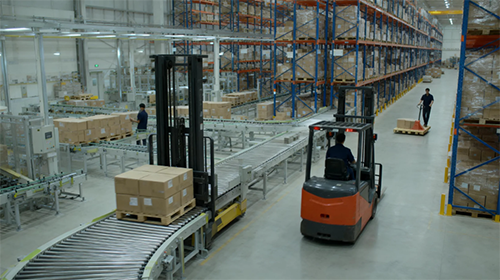
Pallet Trucks and Stackers
Pallet trucks and stackers are widely used for short-distance transportation and low-level stacking operations in warehouses.
When to Use
- Loading and unloading goods
- Short-distance pallet transport
- Small to medium warehouse operations
Types
- Manual pallet trucks
- Electric pallet trucks
- Semi-electric stackers
Advantages
- Low cost and easy maintenance
- Simple operation
- Ideal for tight spaces
Forklifts
Forklifts are essential for heavy-duty material handling and high stacking operations in warehouses and industrial environments.
When to Use
- Heavy load transportation
- High storage racks
- Large warehouse operations
Types
- Electric forklifts
- Diesel forklifts
- Reach trucks
Advantages
- High load capacity
- Versatile applications
- Efficient vertical stacking
Pallet Truck vs Forklift
| Feature | Pallet Truck | Forklift |
|---|---|---|
| Load Capacity | Light to Medium | Heavy |
| Lifting Height | Low | High |
| Cost | Low | High |
| Best Use | Short-distance transport | Heavy lifting & stacking |
Logistics Trolleys and Carts
Logistics trolleys are ideal for manual transport, especially in order picking and internal movement.
When to Use
- E-commerce picking
- Retail restocking
- Light goods transport
Types
- Platform trolleys
- Roll cage trolleys
- Order picking carts
Advantages
- Flexible and mobile
- No power required
- Cost-effective
Conveyor Systems
Conveyor systems automate the movement of goods, improving efficiency in high-volume operations.
When to Use
- Sorting and packing lines
- Distribution centers
- Continuous material flow
Types
- Belt conveyors
- Roller conveyors
- Gravity conveyors
Advantages
- Reduces manual labor
- Improves speed
- Supports automation
Cranes and Hoists
Used for lifting heavy or oversized materials that cannot be handled by forklifts.
When to Use
- Heavy manufacturing
- Steel or machinery handling
- Precision lifting tasks
Advantages
- Handles extreme loads
- Improves safety
- Reduces labor risk
Automated Material Handling Equipment
Automation systems improve efficiency and reduce labor dependency in modern warehouses.
When to Use
- Large-scale warehouses
- High-volume operations
- Labor shortage scenarios
Types
- AGV (Automated Guided Vehicles)
- AMR (Autonomous Mobile Robots)
- Automated conveyors
Advantages
- High efficiency
- Improved accuracy
- Scalable operations
Material Handling Containers and Storage Aids
These tools improve organization and efficiency when used alongside handling equipment.
Types
- Pallets
- Wire mesh containers
- Plastic bins
Benefits
- Better organization
- Reduced damage
- Improved handling efficiency
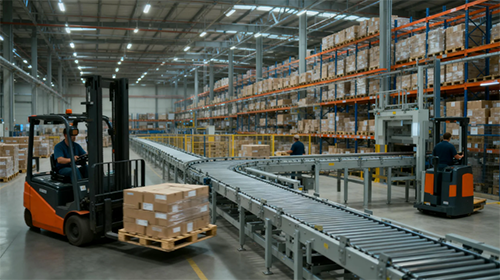
Warehouse Scenarios & Equipment Matching
E-commerce Warehouses
- Trolleys for picking
- Conveyors for sorting
- Bins for SKU management
Improves picking speed and reduces walking distance.
Cold Storage
- Electric pallet trucks
- Plastic pallets
- Sealed containers
Ensures safety and reliability in low temperatures.
Manufacturing
- Forklifts
- Cranes
- Wire containers
Handles heavy and irregular materials efficiently.